Whiting Silver Midge 1/2 Saddle - Grizzly Variant
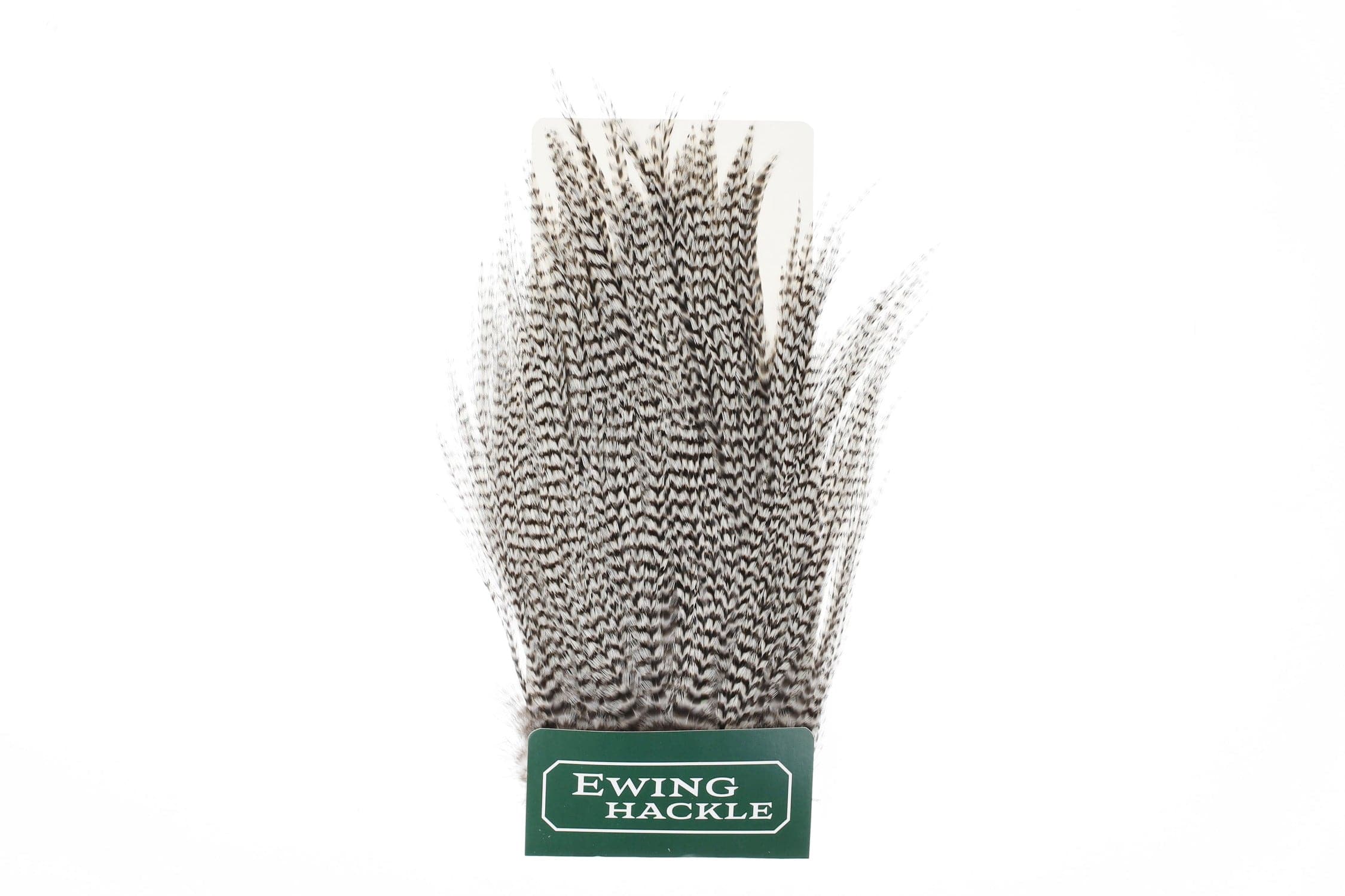
The Whiting Silver Midge 1/2 Saddle in Grizzly Variant is a specialized genetic hackle prized by fly tyers for creating very small dry flies. Sourced from Whiting Farms, this saddle provides an exceptional number of long, slender feathers with stiff, dense barbs and incredibly fine, flexible stems. These characteristics are essential for wrapping hackle on hooks in sizes #18 through #26 and smaller without adding unnecessary bulk. The Silver grade designation ensures a high feather count and superb quality, making it a valuable investment for the dedicated small-fly tyer.
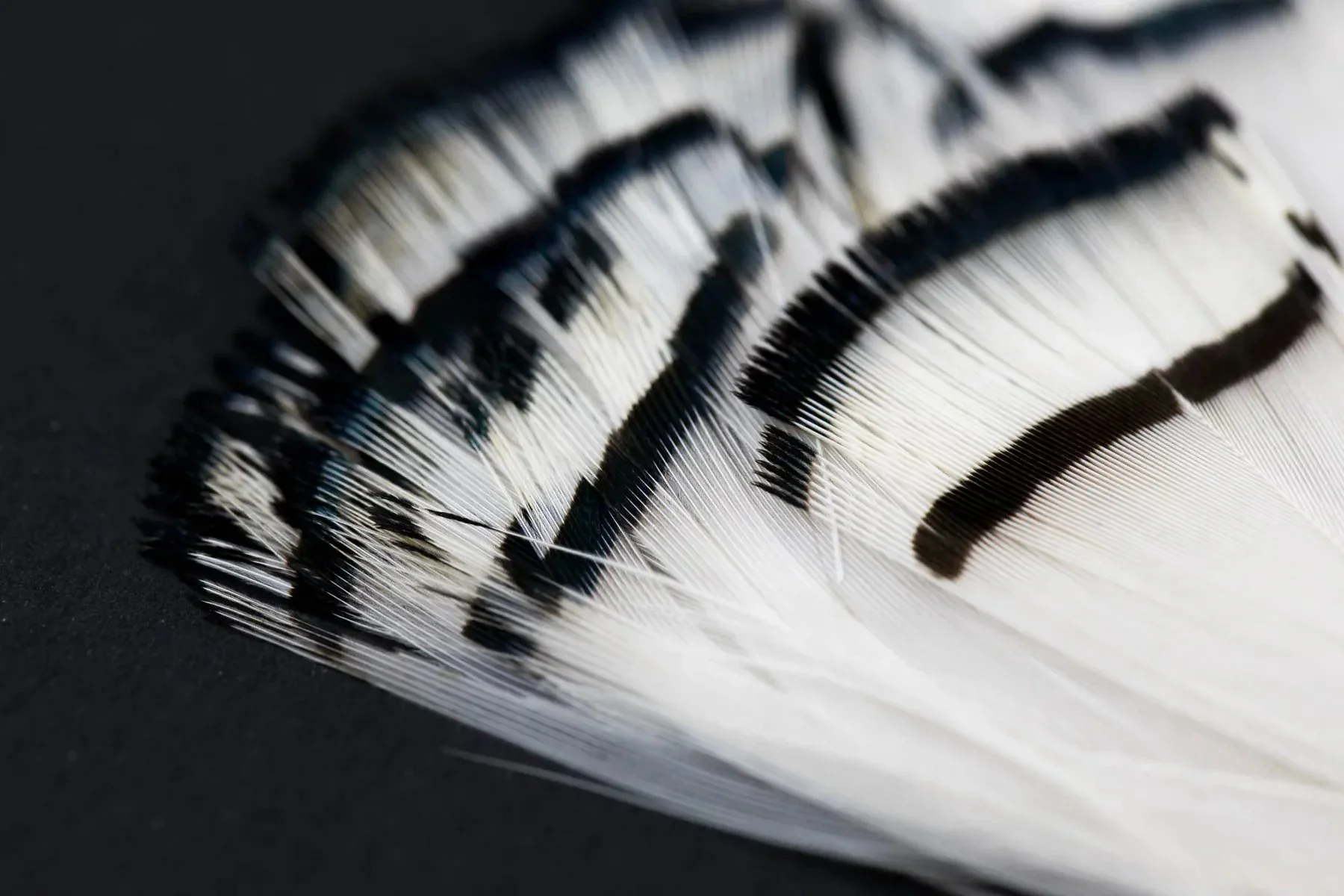
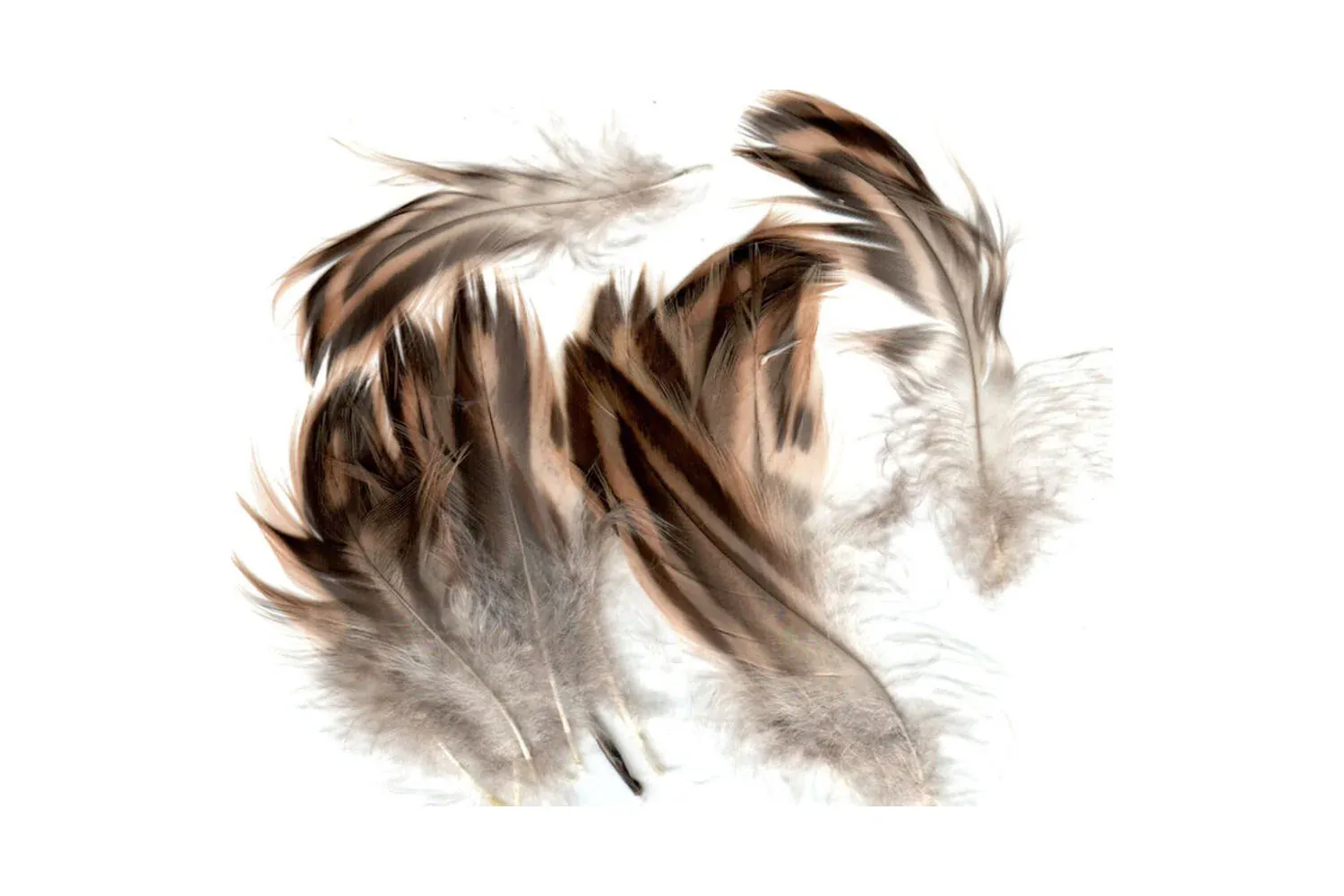
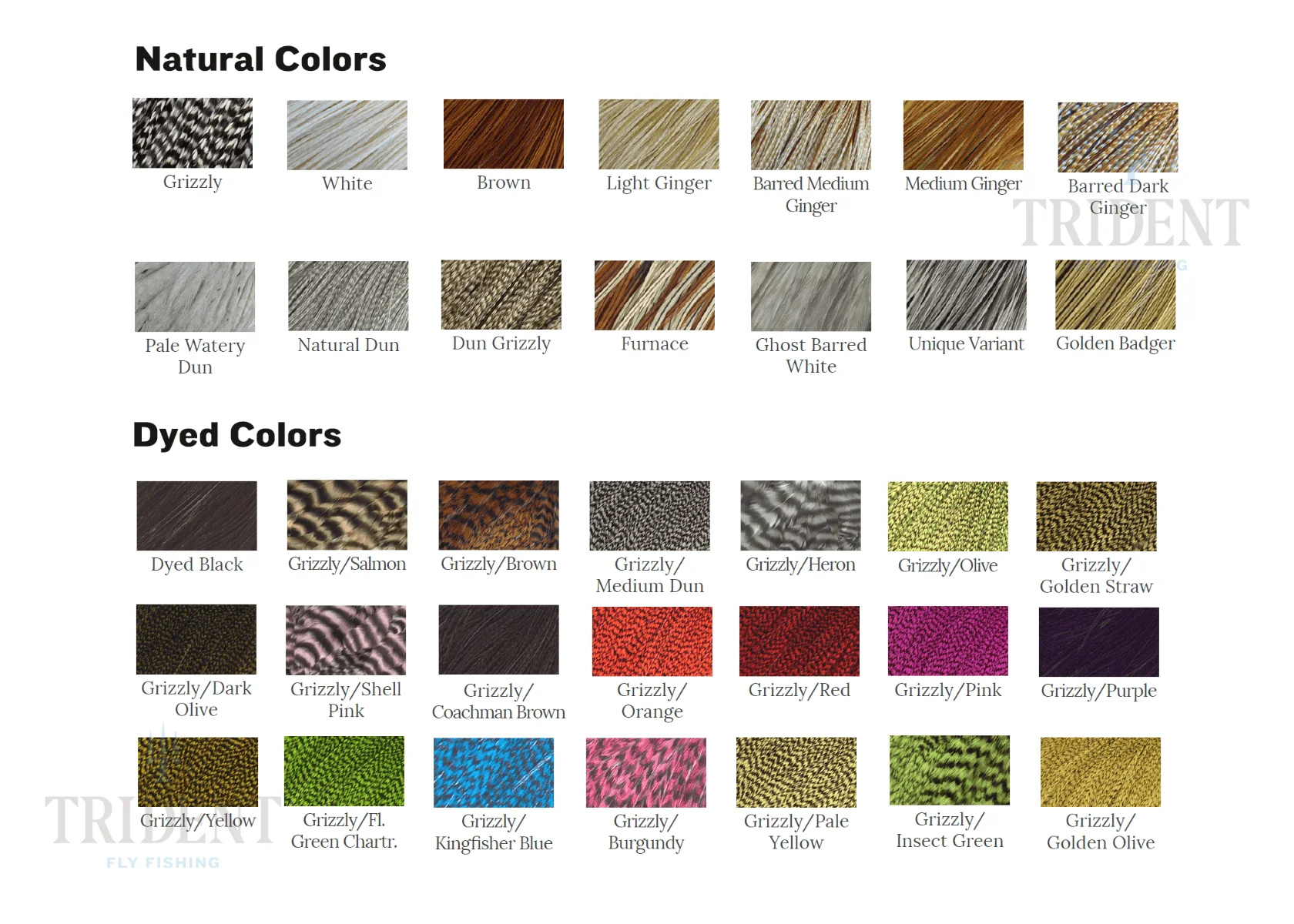
The "Grizzly Variant" coloration offers a range of natural, mottled patterns beyond the standard black-and-white barred grizzly. A single saddle can contain feathers with shades from light ginger grizzly to dark, almost black barring, and may include subtle tones of dun or brown. This variation allows tyers to create more nuanced, imitative patterns that can more accurately match the specific coloration of local insect life. It provides a versatile palette of buggy colors all within one product, perfect for matching various midge, trico, and small mayfly hatches.
Example Flies
Griffith's Gnat: This classic midge cluster pattern is defined by its palmered grizzly hackle over a peacock herl body. Using a feather from a Whiting Midge Saddle is crucial for tying this fly in its most effective small sizes (#20-#24), as the fine stem wraps cleanly and the stiff barbs create the perfect fuzzy silhouette on the water's surface, imitating a ball of mating midges.
Parachute Adams: While traditionally tied with separate brown and grizzly hackles, a Grizzly Variant feather can be used to create a buggy, blended-color parachute on small-sized Parachute Adams patterns. The feather's supple stem wraps cleanly around the post, and its stiff fibers provide excellent visibility and flotation for the fly, which is critical in sizes #18 and smaller when imitating tiny mayflies or midges.
Mosquito: This quintessential pattern requires a crisp, well-defined hackle to imitate the insect's legs and create a distinct impression on the water. In smaller sizes (#18-#22), a Whiting Midge Saddle feather provides the ideal properties. Its stiff, web-free barbs will not mat down, ensuring the fly floats high, and the fine stem avoids building up bulk on the slim peacock quill body.
Tiny Renegade: The Renegade uses hackle at both the front and rear of the hook shank to create a highly visible attractor pattern. When scaling this fly down to midge sizes (#20 and smaller), the length and quality of a Whiting Midge feather are essential. A single feather can often provide enough length for both hackle stations, and its stiffness keeps the tiny fly floating properly.
Grizzly & Peacock Midge: This simple yet effective midge pupa or adult imitation consists of little more than a peacock herl body and a collar of grizzly hackle. The feather from a Grizzly Variant Midge Saddle provides the perfect sparse, spiky profile needed to imitate the legs and antennae of an emerging midge. Just two or three wraps are needed to create the impression of life on a size #22 or #24 hook.
How To Use It
To use this material, select a single feather from the saddle with barb lengths appropriate for your target hook size; the barbs should typically extend from the hook shank to just beyond the hook point. Prepare the feather by stripping away the fluffy fibers at the base, leaving a small, clean portion of the stem to tie in. For traditionally collared flies, tie the stem in securely behind the hook eye and make two to four touching wraps forward, ensuring the barbs splay out correctly. The fine stem allows for precise application on even the smallest hooks without creating a bulky head.
Beyond standard collars, these feathers are also ideal for other applications. A small bunch of 6 to 8 barbules can be tied in as a tail for a small mayfly pattern. For parachute flies, the feather is wrapped vertically around a post of calf tail or synthetic yarn, creating a highly visible and effective footprint. The consistent quality and extreme length of each feather mean that a single one can often be used to tie multiple small flies, maximizing the value of the saddle.
Why We Like It
We like the Whiting Silver Midge Saddle for its unparalleled consistency and tying efficiency. Each saddle contains a massive quantity of usable feathers, offering incredible value by allowing a tyer to produce hundreds, if not thousands, of flies from a single purchase. The genetic engineering behind these feathers results in minimal web and a supple, strong stem that resists breaking when wrapped on the smallest of hooks, which is a common point of failure for lower-quality hackle.
The performance of the material on the water is another key reason for its popularity. The barb density and stiffness are precisely calibrated to support a fly on the surface film with the minimum number of wraps, creating delicate, realistic, and high-floating patterns. The Grizzly Variant color adds a layer of versatility, giving tyers a spectrum of natural, buggy shades to work with, which can be critical for fooling selective, educated trout that have seen countless standard grizzly patterns.
Whiting Midge Saddle vs. Metz Midge Saddle
The most direct comparable material to a Whiting Midge Saddle is the Metz Midge Saddle. Both are premium genetic hackles developed specifically for tying small flies. Whiting saddles are often noted for having slightly longer individual feathers and exceptionally fine, durable stems throughout the entire skin, a product of their focused genetic program. Metz saddles are also of exceptional quality and are favored by many experienced tyers, with some finding their barb stiffness to be superior. The choice between them often comes down to a tyer's personal preference for stem flexibility and specific color variations, as both products will produce outstanding small flies.
Product Information
Product Information
Shipping & Returns
Shipping & Returns




Whiting Silver Midge 1/2 Saddle - Grizzly Variant
Whiting Silver Midge 1/2 Saddle - Grizzly Variant
The Whiting Silver Midge 1/2 Saddle in Grizzly Variant is a specialized genetic hackle prized by fly tyers for creating very small dry flies. Sourced from Whiting Farms, this saddle provides an exceptional number of long, slender feathers with stiff, dense barbs and incredibly fine, flexible stems. These characteristics are essential for wrapping hackle on hooks in sizes #18 through #26 and smaller without adding unnecessary bulk. The Silver grade designation ensures a high feather count and superb quality, making it a valuable investment for the dedicated small-fly tyer.
The "Grizzly Variant" coloration offers a range of natural, mottled patterns beyond the standard black-and-white barred grizzly. A single saddle can contain feathers with shades from light ginger grizzly to dark, almost black barring, and may include subtle tones of dun or brown. This variation allows tyers to create more nuanced, imitative patterns that can more accurately match the specific coloration of local insect life. It provides a versatile palette of buggy colors all within one product, perfect for matching various midge, trico, and small mayfly hatches.
Example Flies
Griffith's Gnat: This classic midge cluster pattern is defined by its palmered grizzly hackle over a peacock herl body. Using a feather from a Whiting Midge Saddle is crucial for tying this fly in its most effective small sizes (#20-#24), as the fine stem wraps cleanly and the stiff barbs create the perfect fuzzy silhouette on the water's surface, imitating a ball of mating midges.
Parachute Adams: While traditionally tied with separate brown and grizzly hackles, a Grizzly Variant feather can be used to create a buggy, blended-color parachute on small-sized Parachute Adams patterns. The feather's supple stem wraps cleanly around the post, and its stiff fibers provide excellent visibility and flotation for the fly, which is critical in sizes #18 and smaller when imitating tiny mayflies or midges.
Mosquito: This quintessential pattern requires a crisp, well-defined hackle to imitate the insect's legs and create a distinct impression on the water. In smaller sizes (#18-#22), a Whiting Midge Saddle feather provides the ideal properties. Its stiff, web-free barbs will not mat down, ensuring the fly floats high, and the fine stem avoids building up bulk on the slim peacock quill body.
Tiny Renegade: The Renegade uses hackle at both the front and rear of the hook shank to create a highly visible attractor pattern. When scaling this fly down to midge sizes (#20 and smaller), the length and quality of a Whiting Midge feather are essential. A single feather can often provide enough length for both hackle stations, and its stiffness keeps the tiny fly floating properly.
Grizzly & Peacock Midge: This simple yet effective midge pupa or adult imitation consists of little more than a peacock herl body and a collar of grizzly hackle. The feather from a Grizzly Variant Midge Saddle provides the perfect sparse, spiky profile needed to imitate the legs and antennae of an emerging midge. Just two or three wraps are needed to create the impression of life on a size #22 or #24 hook.
How To Use It
To use this material, select a single feather from the saddle with barb lengths appropriate for your target hook size; the barbs should typically extend from the hook shank to just beyond the hook point. Prepare the feather by stripping away the fluffy fibers at the base, leaving a small, clean portion of the stem to tie in. For traditionally collared flies, tie the stem in securely behind the hook eye and make two to four touching wraps forward, ensuring the barbs splay out correctly. The fine stem allows for precise application on even the smallest hooks without creating a bulky head.
Beyond standard collars, these feathers are also ideal for other applications. A small bunch of 6 to 8 barbules can be tied in as a tail for a small mayfly pattern. For parachute flies, the feather is wrapped vertically around a post of calf tail or synthetic yarn, creating a highly visible and effective footprint. The consistent quality and extreme length of each feather mean that a single one can often be used to tie multiple small flies, maximizing the value of the saddle.
Why We Like It
We like the Whiting Silver Midge Saddle for its unparalleled consistency and tying efficiency. Each saddle contains a massive quantity of usable feathers, offering incredible value by allowing a tyer to produce hundreds, if not thousands, of flies from a single purchase. The genetic engineering behind these feathers results in minimal web and a supple, strong stem that resists breaking when wrapped on the smallest of hooks, which is a common point of failure for lower-quality hackle.
The performance of the material on the water is another key reason for its popularity. The barb density and stiffness are precisely calibrated to support a fly on the surface film with the minimum number of wraps, creating delicate, realistic, and high-floating patterns. The Grizzly Variant color adds a layer of versatility, giving tyers a spectrum of natural, buggy shades to work with, which can be critical for fooling selective, educated trout that have seen countless standard grizzly patterns.
Whiting Midge Saddle vs. Metz Midge Saddle
The most direct comparable material to a Whiting Midge Saddle is the Metz Midge Saddle. Both are premium genetic hackles developed specifically for tying small flies. Whiting saddles are often noted for having slightly longer individual feathers and exceptionally fine, durable stems throughout the entire skin, a product of their focused genetic program. Metz saddles are also of exceptional quality and are favored by many experienced tyers, with some finding their barb stiffness to be superior. The choice between them often comes down to a tyer's personal preference for stem flexibility and specific color variations, as both products will produce outstanding small flies.
Original: $120.99
-65%$120.99
$42.35Product Information
Product Information
Shipping & Returns
Shipping & Returns
Description
The Whiting Silver Midge 1/2 Saddle in Grizzly Variant is a specialized genetic hackle prized by fly tyers for creating very small dry flies. Sourced from Whiting Farms, this saddle provides an exceptional number of long, slender feathers with stiff, dense barbs and incredibly fine, flexible stems. These characteristics are essential for wrapping hackle on hooks in sizes #18 through #26 and smaller without adding unnecessary bulk. The Silver grade designation ensures a high feather count and superb quality, making it a valuable investment for the dedicated small-fly tyer.
The "Grizzly Variant" coloration offers a range of natural, mottled patterns beyond the standard black-and-white barred grizzly. A single saddle can contain feathers with shades from light ginger grizzly to dark, almost black barring, and may include subtle tones of dun or brown. This variation allows tyers to create more nuanced, imitative patterns that can more accurately match the specific coloration of local insect life. It provides a versatile palette of buggy colors all within one product, perfect for matching various midge, trico, and small mayfly hatches.
Example Flies
Griffith's Gnat: This classic midge cluster pattern is defined by its palmered grizzly hackle over a peacock herl body. Using a feather from a Whiting Midge Saddle is crucial for tying this fly in its most effective small sizes (#20-#24), as the fine stem wraps cleanly and the stiff barbs create the perfect fuzzy silhouette on the water's surface, imitating a ball of mating midges.
Parachute Adams: While traditionally tied with separate brown and grizzly hackles, a Grizzly Variant feather can be used to create a buggy, blended-color parachute on small-sized Parachute Adams patterns. The feather's supple stem wraps cleanly around the post, and its stiff fibers provide excellent visibility and flotation for the fly, which is critical in sizes #18 and smaller when imitating tiny mayflies or midges.
Mosquito: This quintessential pattern requires a crisp, well-defined hackle to imitate the insect's legs and create a distinct impression on the water. In smaller sizes (#18-#22), a Whiting Midge Saddle feather provides the ideal properties. Its stiff, web-free barbs will not mat down, ensuring the fly floats high, and the fine stem avoids building up bulk on the slim peacock quill body.
Tiny Renegade: The Renegade uses hackle at both the front and rear of the hook shank to create a highly visible attractor pattern. When scaling this fly down to midge sizes (#20 and smaller), the length and quality of a Whiting Midge feather are essential. A single feather can often provide enough length for both hackle stations, and its stiffness keeps the tiny fly floating properly.
Grizzly & Peacock Midge: This simple yet effective midge pupa or adult imitation consists of little more than a peacock herl body and a collar of grizzly hackle. The feather from a Grizzly Variant Midge Saddle provides the perfect sparse, spiky profile needed to imitate the legs and antennae of an emerging midge. Just two or three wraps are needed to create the impression of life on a size #22 or #24 hook.
How To Use It
To use this material, select a single feather from the saddle with barb lengths appropriate for your target hook size; the barbs should typically extend from the hook shank to just beyond the hook point. Prepare the feather by stripping away the fluffy fibers at the base, leaving a small, clean portion of the stem to tie in. For traditionally collared flies, tie the stem in securely behind the hook eye and make two to four touching wraps forward, ensuring the barbs splay out correctly. The fine stem allows for precise application on even the smallest hooks without creating a bulky head.
Beyond standard collars, these feathers are also ideal for other applications. A small bunch of 6 to 8 barbules can be tied in as a tail for a small mayfly pattern. For parachute flies, the feather is wrapped vertically around a post of calf tail or synthetic yarn, creating a highly visible and effective footprint. The consistent quality and extreme length of each feather mean that a single one can often be used to tie multiple small flies, maximizing the value of the saddle.
Why We Like It
We like the Whiting Silver Midge Saddle for its unparalleled consistency and tying efficiency. Each saddle contains a massive quantity of usable feathers, offering incredible value by allowing a tyer to produce hundreds, if not thousands, of flies from a single purchase. The genetic engineering behind these feathers results in minimal web and a supple, strong stem that resists breaking when wrapped on the smallest of hooks, which is a common point of failure for lower-quality hackle.
The performance of the material on the water is another key reason for its popularity. The barb density and stiffness are precisely calibrated to support a fly on the surface film with the minimum number of wraps, creating delicate, realistic, and high-floating patterns. The Grizzly Variant color adds a layer of versatility, giving tyers a spectrum of natural, buggy shades to work with, which can be critical for fooling selective, educated trout that have seen countless standard grizzly patterns.
Whiting Midge Saddle vs. Metz Midge Saddle
The most direct comparable material to a Whiting Midge Saddle is the Metz Midge Saddle. Both are premium genetic hackles developed specifically for tying small flies. Whiting saddles are often noted for having slightly longer individual feathers and exceptionally fine, durable stems throughout the entire skin, a product of their focused genetic program. Metz saddles are also of exceptional quality and are favored by many experienced tyers, with some finding their barb stiffness to be superior. The choice between them often comes down to a tyer's personal preference for stem flexibility and specific color variations, as both products will produce outstanding small flies.